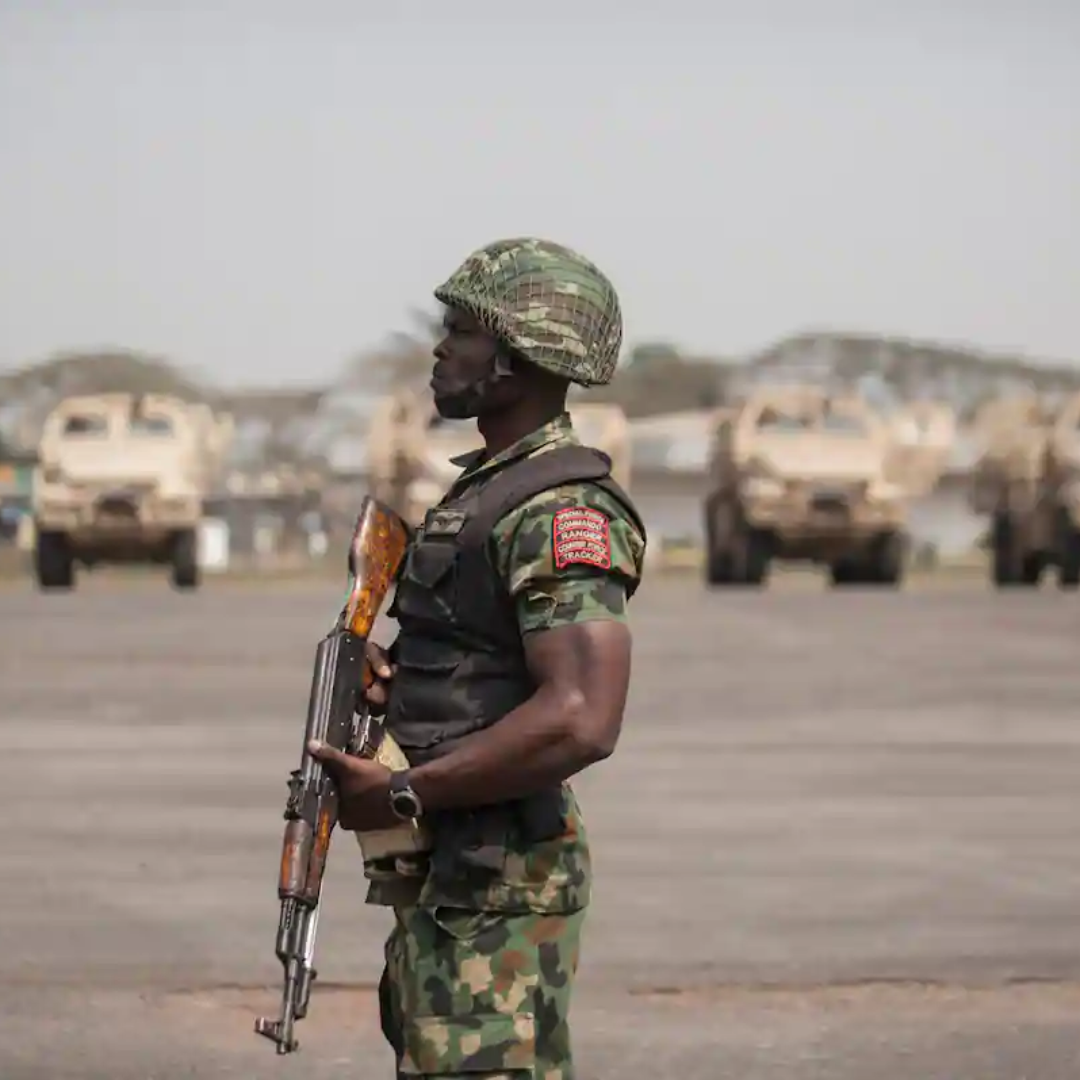
How to join the Nigerian army as a graduate.
The Nigerian Army offers university and polytechnic graduates a structured and prestigious pathway to transition from civilian professional life into the military officer corps. For individuals who have already completed their tertiary education and obtained a degree, joining the army does not require passing through the traditional five-year cadet program at the Nigerian Defence Academy. Instead, the military relies on accelerated direct commissioning routes to bring in educated personnel who can immediately fill tactical leadership or specialized professional roles.
Graduates looking to commission as officers in the Nigerian Army must choose between two distinct entry pathways, meet stringent institutional criteria, and navigate a rigorous multi-stage selection process.
Read also: Nigerian Army SSC Recruitment and Requirements
How to join the Nigerian army as a graduate
Step 1: Choose the Right Commission Pathway
Before applying, a graduate must determine which of the two primary officer entry tracks aligns with their academic qualifications and career goals.
- Short Service Combatant Commission (SSC): This track is designed for graduates from any field of study who want to become operational field leaders and direct combat commanders. The training lasts for nine months, focusing heavily on frontline warfare, unit tactics, and combat leadership. Officers on this track start as Second Lieutenants and have the unique opportunity to convert into regular career combatant officers, meaning they can theoretically rise to the absolute highest command ranks in the army.
- Direct Short Service Commission (DSSC): This track is explicitly reserved for professionals who intend to practice their specific civilian fields within a military environment. The army uses the DSSC to recruit doctors, lawyers, engineers, psychologists, IT experts, accountants, and educators. The training lasts for six months, focusing on basic military orientation rather than advanced infantry combat. DSSC officers are typically commissioned as Lieutenants and work within support corps like the Medical, Legal, or Finance units.
Step 2: Confirm Basic Eligibility Requirements
The Nigerian Army maintains strict baseline entry standards to ensure all prospective officer cadets possess the physical, mental, and legal capacity to serve. While specific academic requirements can change depending on current military needs, general requirements include:
- Nationality: Applicants must be Nigerian citizens by birth and possess a valid National Identity Number (NIN).
- Age Limits: For the combatant track (SSC), candidates must typically be between 23 and 27 years old at the time of entry. For the specialist track (DSSC), the age limit is usually extended up to 30 years, with further extensions up to 34 or 35 years uniquely granted to highly specialized medical consultants.
- Academic Qualifications: Applicants must hold a Bachelor’s degree (B.Sc., B.A., B.Eng., etc.) or a Higher National Diploma (HND) from a recognized tertiary institution. Candidates must also possess at least five O’Level credits, including English Language and Mathematics, obtained in no more than two sittings.
- NYSC Certification: Graduates must present an official Discharge Certificate or a valid Exemption Letter from the National Youth Service Corps (NYSC).
- Physical Metrics: Male applicants must stand at a minimum height of 1.68 meters, while female applicants must be at least 1.65 meters tall. All applicants must pass comprehensive vision, hearing, and systemic medical checks.
- Character and Record: Candidates must possess a clean legal record with no criminal convictions. They must also provide valid character references from notable societal figures, such as a traditional ruler, a high-ranking civil servant, or a military officer.
Step 3: Complete the Online Application
The formal recruitment journey begins online when the Nigerian Army opens its official application portal, usually once a year.
- Visit the official Nigerian Army recruitment portal during an active application window.
- Create a user profile using a valid email address and phone number.
- Accurately fill out the digital application form, carefully selecting either the SSC or DSSC track based on qualifications.
- Upload clear scans of all required documents, including degree certificates, NYSC discharge papers, O’Level results, local government origin certificates, and birth certificates.
- Print out the completed application summary sheet along with the generated institutional recommendation forms.
Step 4: Attend the Selection Board Screening
Applications undergo an initial digital filtering process. Candidates whose profiles align with the military’s current intake requirements are shortlisted to attend the physical Selection Board Screening, which takes place over several weeks at a designated military camp, often in Falgore Forest or Jaji.
The screening is highly competitive and designed to test candidates under stress across multiple areas:
- Credentials Verification: A strict physical vetting of all original educational and legal documents. Any discrepancy results in immediate disqualification.
- Comprehensive Medical Vetting: Detailed evaluations covering blood work, dental health, chest X-rays, cardiac function, physical deformities, and pregnancy testing for female candidates.
- Physical Fitness Assessment: Demanding physical tests, including timed long-distance runs, push-up quotas, sit-ups, and obstacle course navigation designed to gauge endurance and stamina.
- Aptitude and Psychometric Testing: Written examinations evaluating logical reasoning, general knowledge, military awareness, and psychological stability.
- Interview Panels: Face-to-face oral interviews with senior military generals to assess communication skills, leadership potential, emotional intelligence, and patriotism.
Step 5: Final Shortlist and Military Training
Candidates who excel across all phases of the Selection Board are placed on the final national merit shortlist. Upon approval by the Chief of Army Staff, successful candidates are directed to report directly to the Nigerian Army School of Infantry or designated training grounds to begin their intensive officer cadet course.
Surviving the rigors of the six-month or nine-month training cycle culminates in a formal Passing-Out Parade, where cadets are sworn in, take the official oath of allegiance, and receive their Presidential Commission to begin active service as military officers.
Conclusion
Joining the Nigerian Army as a graduate is a highly competitive process that requires a careful combination of strong academic credentials, physical fitness, mental resilience, and impeccable character. Whether choosing the frontline leadership of the Short Service Combatant track or the specialized professional focus of the Direct Short Service Commission, the path offers graduates a profound opportunity to utilize their degrees in service to the nation’s defense and strategic security architecture.
If you would like to expand or adjust this article, let me know:
- Do you want to include specific details on how to prepare for the physical fitness tests?
- Should I outline the specific professional fields currently in highest demand for the DSSC track?







4 thoughts on “How to join the Nigerian army as a graduate”