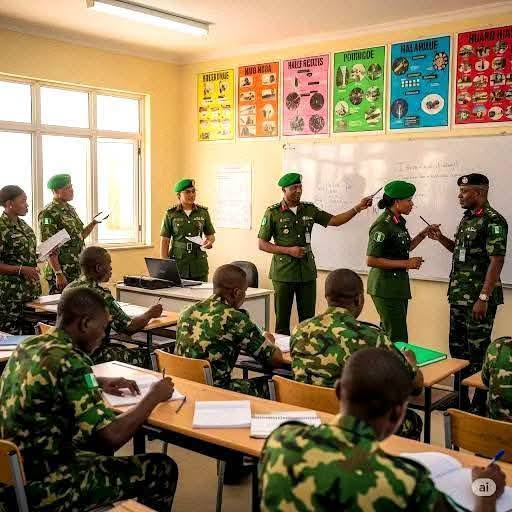
Difference between tradesmen and non tradesmen in the Nigerian army.
The Nigerian Army, as a massive and complex land force, relies on a diverse manpower structure to execute its constitutional defense mandate. To effectively manage its human resources, the military categorizes its non-commissioned officers and enlisted personnel (the ranks below commissioned officers) into two primary operational groups: Tradesmen and Non-Tradesmen.
While both groups undergo the same basic military training and are equally bound by regimented discipline, their recruitment paths, day-to-day duties, educational requirements, and promotion timelines are completely different. Understanding the differences between these two tracks is essential for any applicant looking to join the Nigerian Army through the regular or depot recruitment intakes.
Read also: Nigerian air force ranks and symbols insignia
Difference between tradesmen and non tradesmen in the Nigerian army
Core Definition and Primary Mandate
The foundational difference between the two categories lies in the primary role they fill within the army’s organizational structure.
- Tradesmen: These are personnel who possess specialized technical skills, vocational certifications, or professional qualifications before joining the military, or who are trained by the army to fill highly technical positions. Their primary mandate is to provide specialized technical, maintenance, medical, or administrative support to the fighting force.
- Non-Tradesmen: These are personnel recruited primarily to serve as the core fighting strength and operational backbone of the army. Their primary mandate centers around direct combat operations, physical security, field maneuvers, and infantry tactics.
Educational and Skill Requirements
Because their duties are structurally distinct, the entry qualifications demanded by the army during recruitment vary heavily between the two lines.
- Tradesmen Requirements: Applicants looking to join as tradesmen must hold relevant technical or vocational certifications in addition to their basic secondary school certificates. These include Ordinary National Diplomas (OND), National Technical Certificates (NTC), City and Guilds certificates, Trade Test certifications (Levels 1, 2, or 3), or specialized diplomas. The army looks for certified mechanics, electricians, nurses, laboratory technicians, carpenters, plumbers, musicians, and computer operators for this track.
- Non-Tradesmen Requirements: Applicants for this track do not need specialized vocational skills or higher diplomas. The entry baseline relies strictly on the Senior School Certificate Examination (SSCE), West African Senior School Certificate (WASSCE), or National Examination Council (NECO) results. The army values physical endurance, mental resilience, and basic literacy for this line, as these recruits will be trained from scratch in combat tactics.
Training Focus and Postings
Every recruit, regardless of their track, begins their military career at the Depot Nigerian Army in Zaria, where they learn basic soldiering, discipline, weapons handling, and physical fitness. However, their pathways diverge immediately after basic training.
- Tradesmen Training and Postings: After completing basic training, tradesmen are usually sent to specialized military schools for brief orientation courses to align their civilian skills with military hardware. For example, a certified mechanic will be posted to the Nigerian Army Electrical and Mechanical Engineers (NAEME) school. Tradesmen are permanently posted to technical and support corps, such as the Medical Corps, Signals Corps, Supply and Transport, Ordnance, or the Army Band.
- Non-Tradesmen Training and Postings: Upon passing out from the Depot, non-tradesmen are deployed directly to tactical combat arms or combat support units. The vast majority are posted straight to the Infantry, Armour Corps (tanks and mechanized units), or Artillery. Their post-Depot training takes place on the field or at specialized combat schools like the Nigerian Army School of Infantry (NASI), focusing heavily on tactical fieldcraft, counter-insurgency warfare, and advanced weapons management.
Career Progression and Promotion
The financial benefits and speed of promotion across these two categories are governed by the military’s administrative guidelines.
- Tradesmen: Because tradesmen bring valuable, pre-existing professional expertise into the service, they are often granted a faster administrative start. They are typically awarded the rank of Lance Corporal much earlier than their non-trades peers, or given specialized “trade pay” allowances that boost their overall take-home compensation. Their promotion timeline is tied closely to their technical efficiency, upgrading their Trade Test levels, and passing standard military tests.
- Non-Tradesmen: These personnel enter the military at the baseline rank of Private. Their promotion to Lance Corporal, Corporal, and upward requires meeting standard time-in-service criteria, maintaining a clean disciplinary record, showing strong leadership on the field, and passing highly competitive promotional examinations and physical fitness tests. While their promotion requires more physical testing, they form the primary pool for combat leadership positions within tactical platoons and squads.
Summary of Differences
- Tradesmen enter with vocational or technical certificates (OND, Trade Test); Non-Tradesmen enter using basic secondary school results (SSCE/WAEC).
- Tradesmen work primarily in support, maintenance, and administrative directorates; Non-Tradesmen operate in frontline combat branches like the Infantry and Armour.
- Tradesmen enjoy early rank recognition or specialized allowances based on their technical skills; Non-Tradesmen climb sequentially from Private based on field performance and promotional exams.
Conclusion
Both tradesmen and non-tradesmen are indispensable to the success of the Nigerian Army. The non-tradesmen provide the essential combat power, physical resilience, and tactical numbers required to secure territories and fight security threats on the frontline. Meanwhile, the tradesmen provide the critical technical expertise, medical support, and logistical maintenance needed to keep the fighting force operational, moving, and well-supported. Choosing between the two paths during recruitment depends entirely on whether an applicant wishes to leverage a technical trade or dedicate themselves fully to core combat arms.