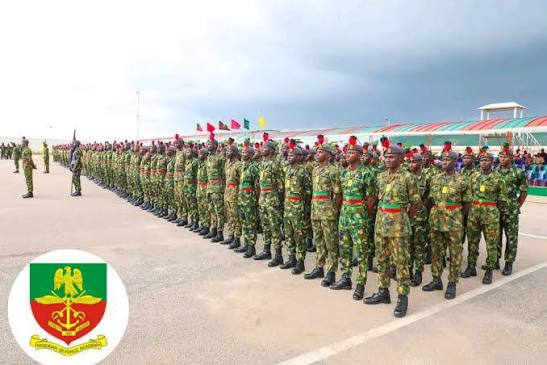
Difference between DSSC and SSC in the Nigerian army.
The Nigerian Army relies on multiple commissioning pathways to maintain its operational readiness, leadership hierarchy, and specialized capabilities. While the traditional five-year regular cadet training at the Nigerian Defence Academy forms the bedrock of the officer corps, alternative avenues exist for university and polytechnic graduates. For citizens who already hold tertiary degrees or professional qualifications, the Direct Short Service Commission and the Short Service Combatant Commission represent the two primary routes to earning an officer’s commission.
Although both programs provide an accelerated transition from civilian life to the military officer ranks, they are designed to fulfill completely different structural needs within the armed forces. They differ extensively in their training length, deployment mandates, entry ranks, and long-term career progression. Understanding these differences is essential for applicants aiming to align their qualifications with the right military career track.
Read also: Nigerian navy salary ranks and allowances
Difference between DSSC and SSC in the Nigerian army
The fundamental distinction between the two commissions lies in their core operational philosophy. The Direct Short Service Commission exists to recruit and integrate civilian professionals whose specialized skills are immediately required by the military. The Nigerian Army uses this pathway to source medical doctors, lawyers, engineers, information technology experts, accountants, educators, and chaplains. Officers commissioned through this route are hired to practice their civilian professions within the military structure. Their primary value to the organization stems from their academic and technical expertise rather than their capacity to command frontline tactical infantry units.
In contrast, the Short Service Combatant Commission is designed to produce frontline combat leaders. This pathway accepts graduates from any academic discipline, provided they meet the basic physical and mental requirements for combat duty. Rather than utilizing specialized professional degrees for administrative or medical support, these candidates are absorbed directly into the arms that engage in active warfare. They are trained specifically to command tactical units, lead infantry platoons, manage combat assets, and execute tactical strategies on the battlefield. Their primary value lies in their physical resilience, leadership capacity, and direct combat readiness.
Training Duration and Focus
The difference in operational expectations dictates the duration and focus of the training programs at military training centers, primarily the Nigerian Army School of Infantry in Jaji, Kaduna.
Direct Short Service Commission candidates undergo an intensive orientation program that typically lasts for six months. Because these individuals enter the service with completed professional certifications, the training does not aim to teach them a new trade. Instead, it focus entirely on introducing basic military discipline, physical conditioning, light weapons handling, basic fieldcraft, regimentation, and officer customs. The objective is to rapidly transition a civilian professional into a functioning military officer who understands army traditions, military law, and the chain of command.
Short Service Combatant Commission candidates undergo a longer and more physically grueling training program, which typically lasts for nine months. This extended timeline is necessary because these cadets must acquire the tactical skills required to lead soldiers into combat situations. The training curriculum focuses heavily on advanced weaponry, tactical command, wilderness survival, map reading, field navigation, counter-insurgency warfare doctrines, and troop management under high-stress conditions. The rigorous schedule condenses the vital combat elements of a multi-year military academy education into nine months to ensure the graduates are ready for immediate deployment to active conflict zones.
Corps Posting and Deployment
Upon successful commissioning, officers from both streams are posted to completely different segments of the Nigerian Army structure, reflecting their distinct training backgrounds.
Officers from the Direct Short Service Commission are permanently posted to non-combat corps, support arms, and administrative directorates. Common assignments include the Nigerian Army Medical Corps, the Directorate of Legal Services, the Nigerian Army Education Corps, the Finance Corps, and the Directorate of Army Public Relations. While these officers may be deployed to operational theaters or conflict zones—such as establishing field clinics or handling military logistics—they perform their duties strictly within their professional field. They do not lead assault operations, command armored units, or direct front-line combat patrols.
Conversely, officers from the Short Service Combatant Commission are posted straight to the core combat and combat-support arms of the army. These arms include the Infantry, the Armour Corps, the Artillery, and the Signals Corps. The daily responsibilities of these officers involve direct tactical duties, including maintaining platoon readiness, leading active patrols, managing weapon systems, and executing combat missions in volatile environments. They are the primary field officers responsible for implementing tactical command decisions on the ground.
Commissioning Rank and Entry Hierarchy
The baseline structure of the two entry paths creates a noticeable difference in the rank at which these officers enter the military hierarchy.
Direct Short Service Commission officers are typically commissioned into the rank of Lieutenant, which is denoted by two stars. In specialized fields requiring exceptionally long academic preparation, such as medical consultants or highly certified technical experts, officers may occasionally be commissioned as Captains. This higher entry rank recognizes the extensive years of tertiary education, residency, internships, and professional licensing required to qualify for these positions prior to entering military service.
Short Service Combatant Commission officers are commissioned into the starting rank of Second Lieutenant, which is denoted by a single star. Regardless of whether they hold a Bachelor’s degree or a Master’s degree, they begin at the lowest rung of the commissioned officer hierarchy. Their seniority within the military dates strictly from the commencement of their specific training cycle, placing them on par with the basic entry level of regular academy graduates.
Career Progression and Promotion Limits
The long-term trajectory and the ultimate ceiling of an officer’s career vary significantly depending on which commission they hold.
The Direct Short Service Commission is initially tied to a specific tenure of service, usually totaling ten years. This contract can be extended in increments based on the performance of the officer and the staffing needs of their specific corps. Because these officers often enter the service at an older age due to professional schooling, their total years of service are naturally limited. While they can steadily rise through the ranks to become Colonels or Brigadier Generals within their medical, legal, or educational directorates, institutional boundaries exist. They do not qualify for major tactical command appointments, such as General Officer Commanding a division, nor are they eligible to become the Chief of Army Staff.
The Short Service Combatant Commission offers a different long-term career outlook. These officers receive an initial commission that can span up to fifteen years. Crucially, combatant officers on this track are given the opportunity to apply for a conversion to a Regular Combatant Commission. This conversion process is highly competitive, based on outstanding performance reviews, rigorous physical fitness tests, and available vacancies.
Once an officer successfully converts to a regular commission, all institutional limitations on their career progression are removed. They enter the mainstream military pipeline alongside regular academy graduates, making them fully eligible to attend advanced war colleges, hold top operational command positions, and potentially rise to the highest ranks in the military, including the position of Chief of Army Staff.
Conclusion
The Direct Short Service Commission and the Short Service Combatant Commission serve two distinct structural purposes within the Nigerian Army. The first offers an entry point for established civilian specialists to apply their technical skills to military support systems, granting a higher initial rank and a shorter training cycle. The second provides a demanding entry path for graduates looking to build a career in active field command and battlefield leadership, offering a route to full regular combatant status. Both streams work together to ensure the army possesses both the tactical fighting strength and the professional expertise required to protect the nation.
If you want to refine this text further, let me know:
- Do you want to expand on the age requirements for both tracks?
- Should we focus more on the specific academic disciplines accepted for each commission?









1 thought on “Difference between DSSC and SSC in the Nigerian army”