Nigerian navy ranks and symbols updated.
The Nigerian Navy, established as a critical branch of the nation’s Armed Forces, operates under a structured hierarchical system that defines command, authority, and responsibility. This maritime force utilizes distinct ranking structures for its personnel, which are broadly divided into two major categories: commissioned officers and non-commissioned (enlisted) ratings. Each rank is accompanied by specific insignia and symbols worn on uniforms, reflecting the traditions of global naval forces while retaining distinct Nigerian military identifiers.
Understanding the updated ranking matrix and its corresponding symbols is essential for comprehending the organizational flow of the navy. The hierarchy ensures that strategic maritime defense, coastal policing, and tactical operations are executed with absolute precision under a unified chain of command.
Read also: £28K UK Cleaning Jobs for Foreigners With Visa Sponsorship: What You Need to Know
Nigerian navy ranks and symbols updated
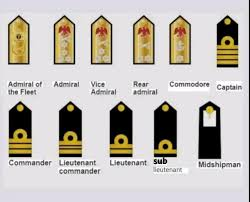
Commissioned officers are the managers, planners, and top commanders of the Nigerian Navy. They enter the service through institutional pathways such as the Nigerian Defence Academy or the Direct Short Service Commission. Their ranks are symbolized predominantly by gold lace braids (rings) worn on the sleeves of their dress uniforms or epaulettes on their shoulders.
The structure ascends from junior officers to senior leadership, culminating in the highest admiral ranks:
- Midshipman: This is the lowest officer rank, typically held by naval cadets in their final stages of training. The symbol features a distinct gold button and a small twist of gold cord on the lapel.
- Sub-Lieutenant: The first official commissioned rank for junior officers. The insignia consists of one narrow gold band worn on the shoulder epaulette or sleeve.
- Lieutenant: A fully established junior officer rank responsible for specific ship departments. The symbol consists of two parallel rows of gold bands.
- Lieutenant Commander: A senior junior officer rank acting as a bridge to higher command. The insignia features two standard gold bands with a narrower gold band placed directly between them.
- Commander: A senior officer rank capable of commanding smaller naval vessels or holding key shore appointments. The symbol consists of three parallel gold bands.
- Captain: A highly senior operational rank responsible for major naval ships, air bases, or large shore establishments. The insignia features four parallel gold bands.
Flag Officer (Admiral) Ranks
The highest tier of naval leadership comprises the flag officers. Their symbols include a combination of broad gold bands, crossed swords, and stars on their shoulder boards to denote supreme authority:
- Commodore: The first flag officer rank. The symbol features one exceptionally broad gold band on the sleeve, or a shoulder epaulette bearing a national crest (the eagle and crossed gavels) alongside a single star.
- Rear Admiral: A high-level flag rank equivalent to a Major General in the army. The insignia displays a broad gold band accompanied by two smaller bands on the sleeve, or a shoulder board with the national crest, a crossed sword and baton, and two stars arranged linearly.
- Vice Admiral: The rank usually held by the Chief of Naval Staff. The symbol features a broad gold band with three smaller bands on the sleeve, or a shoulder board bearing the national crest, crossed weapons, and three stars.
- Admiral: A rare, top-tier rank within the naval hierarchy. The insignia consists of a broad gold band with four smaller bands, or a shoulder board displaying the national crest, crossed weapons, and four stars.
- Admiral of the Fleet: The absolute highest honorary or wartime rank, equivalent to a five-star general. The symbol features intricate gold embroidery with specialized leaf patterns alongside the national coat of arms and five stars.
Non-Commissioned Ratings Rank Structure and Symbols
Ratings represent the enlisted personnel who execute the technical, mechanical, operational, and tactical day-to-day duties across naval vessels and installations. Their ranks are symbolized primarily by cloth chevrons, anchors, and specialized badges worn on the arms or collars of their uniforms.
The rating hierarchy progresses as follows:
- Ordinary Seaman: The entry-level rank for newly recruited personnel upon completing basic training. This rank carries no specialized sleeve insignia or chevrons.
- Able Seaman: A rating who has acquired foundational naval experience. The symbol is a single anchor worn on the upper arm of the uniform.
- Leading Seaman: A junior non-commissioned rating tasked with supervising small teams of seamen. The insignia consists of two crossed anchors worn on the sleeve.
- Petty Officer: A senior technical and supervisory rating. The symbol features a specific naval crown design placed over a single vertical anchor.
- Chief Petty Officer: A highly experienced supervisor within a specific department on a ship. The insignia displays a naval crown encircled by a laurel wreath, worn on the arm or cap.
- Master Warrant Officer: A top-tier non-commissioned rank with significant administrative authority over lower ratings. The symbol features the national coat of arms wrapped inside a specialized laurel wreath.
- Navy Warrant Officer: The highest achievable rank for enlisted personnel, acting as a direct advisor to the commanding officers on rating welfare and discipline. The insignia is the official Nigerian Coat of Arms proudly displayed on the shoulder or forearm.
Conclusion
The updated ranks and symbols of the Nigerian Navy provide a visual language that instantly communicates authority, experience, and duty. From the plain sleeve of an Ordinary Seaman to the multi-starred epaulettes of a Vice Admiral, these markings preserve order on the high seas and at onshore bases. By maintaining this clear distinction between commissioned officers and enlisted ratings, the Nigerian Navy secures an efficient command pipeline capable of protecting the nation’s territorial waters and maritime economic interests.










1 thought on “Nigerian navy ranks and symbols updated”