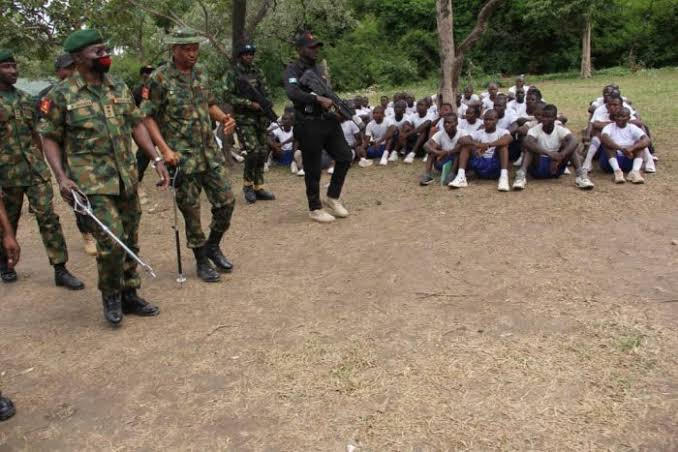
DSS Recruitment and Requirements.
Joining the Department of State Services is not something most Nigerians treat lightly, and honestly, it shouldn’t be. This is the country’s domestic intelligence outfit, the people quietly working behind the scenes on counter-terrorism, surveillance, protection of top government figures, and the general business of keeping internal threats in check.
Unlike a lot of the more visible paramilitary bodies, the DSS doesn’t operate with much fanfare. Its recruitment process reflects that same quiet, no-nonsense character, and if you’re thinking about applying, you need to walk in with your eyes open about what the agency expects.
Read also: University of Oxford Clarendon Scholarships for International Students: Fully Funded Master’s and DPhil Guide
DSS Recruitment and Requirements
Let’s talk first about who the DSS even is, because a surprising number of applicants confuse it with other security bodies. Also known as the State Security Service, the DSS answers to the Presidency through the National Security Adviser. Its focus stays internal: domestic intelligence gathering, counter-espionage, protecting critical government institutions, and stopping threats before they escalate into something the public ever hears about. That mandate is exactly why the agency is so particular about who it lets in.
Now, onto the part everyone actually wants to know: what it takes to qualify. Citizenship comes first and is completely non-negotiable. You must be Nigerian, and in most recruitment cycles, Nigerian by birth. If there’s any question mark over your origin, be ready to back it up with proper documentation at your state command office.
Age is another firm cutoff. Applicants generally need to fall somewhere between 18 and 30 years old, though this window can shift slightly for specialized or technical roles where relevant experience matters more than youth. Academic qualifications follow a tiered structure depending on the position.
For most entry routes, you’re looking at a minimum of five credits in your O’Level results, including English Language, obtained in not more than two sittings. Graduate-level and more technical roles typically call for a Bachelor’s degree, often with at least a Second-Class Lower division, or an HND with a lower credit as the baseline. Certain support or junior roles will accept an OND, NCE, or equivalent qualification instead.
For applicants pursuing specialized units, additional professional certifications tied to the field in question may also come into play.
Physical standards matter here more than they do in a lot of civilian jobs. Male applicants are typically expected to meet a minimum height requirement, with a slightly lower threshold for female applicants. You’ll also need to be free of any physical or mental condition that could interfere with the demands of the role, and a clean bill of health from a recognized medical examination is part of the process. On top of that, your character record has to be spotless. Any history of criminal conviction disqualifies you outright, so this is not a role for anyone with unresolved legal baggage.
Beyond the paperwork requirements, there’s a mindset element that a lot of applicants underestimate. This is a career built on confidentiality. Once you’re in, discretion about the nature of your work becomes second nature, and you have to be genuinely comfortable with that kind of quiet, behind-the-scenes existence. Deployment also isn’t up for negotiation. Wherever the agency needs you, whether that’s your home state or somewhere entirely unfamiliar, you go. If flexibility around location is a dealbreaker for you, this particular career path may not be the right fit.
On the application process itself, the golden rule is simple: only trust the official channel. The DSS runs its recruitment through its own portal, and the agency has repeatedly warned the public about fraudulent websites and WhatsApp broadcasts claiming to offer shortcuts, fast-track access, or paid assistance into the service.
None of that is legitimate. Recruitment into the DSS costs nothing, and anyone asking for money in exchange for a guaranteed spot is running a scam, plain and simple. Your safest move is to check the agency’s official website directly, or visit your nearest DSS state command in person if you want to confirm that a recruitment exercise is genuinely open.
Once you’ve submitted an application, the wait begins. Successful candidates typically get notified through the contact details they provided during registration, so it pays to keep your phone number and email active and to check them regularly during an active recruitment window. From there, shortlisted applicants move into physical screening and an aptitude assessment, both designed to weed out anyone who doesn’t meet the agency’s standards on paper as well as in person.
Given how competitive the process is, it’s worth going in prepared rather than hoping raw luck carries you through.
If you don’t make the cut in a given cycle, that’s not necessarily the end of the road. The DSS conducts recruitment fairly regularly, so missing one window doesn’t shut the door permanently. In the meantime, it’s worth keeping your documents updated, staying physically fit, and paying attention to official announcements so you’re ready the next time applications open.
At the end of the day, a career with the DSS isn’t for everyone, and that’s by design. The agency wants people who can handle the weight of sensitive work, who won’t crack under the demand for silence, and who genuinely believe in the mission of protecting the country from the inside. If that sounds like you, start getting your qualifications, documents, and fitness level in order now, so you’re not scrambling when the next recruitment cycle opens.










1 thought on “DSS Recruitment and Requirements”