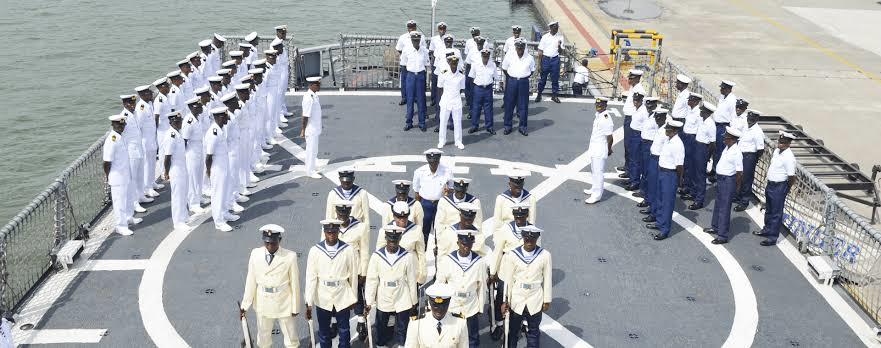
Nigeria Navy Training Allowance Updated.
Anyone gearing up to join the Nigerian Navy, whether through the regular recruit route or the Defence Academy, is bound to wonder what kind of support they’ll get financially before they’re fully commissioned.
It’s a reasonable thing to want clarity on, especially since the Navy has more than one entry pathway, and each comes with a different training length and a different allowance attached to it.
Read also: NDLEA Recruitment and Requirements
Nigeria Navy Training Allowance Updated
Before getting into figures, it helps to understand why the Navy’s structure isn’t a single flat rate the way some other agencies operate. The Nigerian Navy takes in personnel through several distinct routes: straightforward recruitment for those entering with an SSCE certificate, a graduate pathway for those coming in through Direct Short Service Commission, and the Nigerian Defence Academy for those pursuing a longer, more comprehensive officer training track.
Each of these paths carries its own training duration, and the allowance paid during that period scales accordingly.
Starting with the standard recruits, those who join through basic recruitment with an SSCE certificate, training typically runs for around six months at the Nigerian Navy Basic Training School. During this stretch, trainees receive a monthly stipend generally falling between ten thousand five hundred and fifteen thousand naira, though some more recent estimates place the range slightly higher, up to about thirty-five thousand naira depending on the specific intake and any policy adjustments made that year.
This allowance exists purely to cover personal upkeep, since the Navy already handles accommodation, uniforms, and training equipment directly, which is part of why the cash component stays relatively modest.
Graduates entering through the officer commissioning route sit on a different scale entirely. Their training period stretches to about nine months before they’re formally commissioned, and the allowance paid during that time is noticeably higher than what basic recruits receive, generally landing somewhere between fifteen thousand and twenty-five thousand naira monthly. This reflects both the longer commitment involved and the officer-track destination these trainees are working toward.
Then there’s the Nigerian Defence Academy route, which stands apart from both of the above in terms of scale and duration. Cadets going through the NDA spend a full five years in training before becoming confirmed Navy personnel, a considerably longer commitment than either the recruit or graduate pathways. To match that extended timeline, their training allowance starts higher, generally from around twenty-five thousand naira, and climbs as cadets progress through the academy’s levels, potentially reaching up to fifty thousand naira by the later stages of their training.
Taken together, these figures show that the Navy’s overall training allowance spans a fairly wide bracket, roughly ten thousand to fifty thousand naira monthly depending on entry category and how far along a trainee is in their programme. It’s worth being clear-eyed that none of these figures amount to a full salary. They’re designed strictly as support payments, meant to cover incidental personal expenses since the bulk of a trainee’s basic needs, housing, feeding in many cases, uniforms, and equipment, are already provided directly by the Navy.
As with every other paramilitary and military training allowance in Nigeria, this payment is temporary by nature. The day a trainee successfully completes their programme and is confirmed as full naval personnel, whether that’s after six months as a basic recruit, nine months as a commissioned graduate, or five years as an NDA cadet, the training allowance stops immediately.
From there, the individual moves onto the Navy’s proper salary structure, which comes with a considerably fuller package: transport allowance, operational allowance, special forces allowance where applicable, housing support for those outside official quarters, and other benefits tied to rank and posting.
It’s also worth flagging that these figures aren’t necessarily set in stone from one year to the next. Government-determined allowances across the armed forces do get reviewed periodically, and different sources tracking the Navy’s pay structure sometimes report slightly varying numbers depending on when their information was last updated or which specific intake they’re referencing. If you’re currently preparing to join or already going through training, it’s worth staying alert to official Navy communication rather than treating any single figure as permanently fixed.
At the end of the day, the training period across all three Navy entry routes exists to prepare recruits and cadets for the responsibilities they’ll carry once fully commissioned, and the allowance, however modest it looks on paper, is there to keep that process financially manageable rather than to serve as a wage in its own right. Whichever route you’re on, the real reward sits on the other side of training, once you step into the full rank, salary, and long-term career stability that comes with being a confirmed member of the Nigerian Navy.










2 thoughts on “Nigeria Navy Training Allowance Updated”