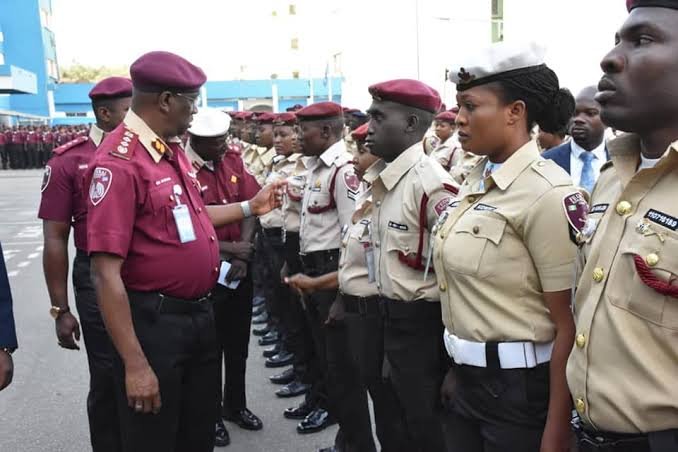
FRSC Training Allowance and Duration.
If you’re on your way into the Federal Road Safety Corps, one thing you should sort out early is what you’ll be living on during the training phase, and exactly how long that phase will last. It’s a fair concern, since training doesn’t come with a full officer’s salary attached, and going in without clarity on either point can catch new recruits off guard.
Let’s start with the money side of things. FRSC does not leave trainees to fend entirely for themselves while they’re going through the programme. Instead, they receive a monthly stipend meant to cover basic living costs, feeding, transportation, and general upkeep, while the actual training runs its course.
Read also: FRSC Salary Ranks and Allowances
FRSC Training Allowance and Duration
How much that stipend comes to depends directly on the length of the training track you’re placed on, which in turn ties back to your entry qualification.
For recruits going through the shorter, 24-week training programme, typically those entering with an SSCE certificate, the monthly allowance falls somewhere between ten thousand and twenty thousand naira. For those on the longer, 52-week track, which usually applies to graduates entering with a higher qualification, the stipend jumps considerably, ranging from around twenty-five thousand up to fifty thousand naira monthly.
The gap between the two tracks makes sense once you consider that graduate-level training tends to run for close to a full year, so the allowance is scaled to match the extended commitment.
It’s worth being upfront about what this allowance actually is and isn’t. It is not a substitute for a real salary, and it was never designed to be generous. Its whole job is to keep trainees financially stable enough to focus on the programme rather than worry about survival costs. The moment training officially ends and a recruit is confirmed and posted to a duty station, this allowance disappears completely and gets replaced by the full monthly salary tied to their rank, along with the wider package of allowances that come with being a confirmed officer under the CONPASS structure, things like housing, transport, hazard pay, and uniform allowances.
Now, on duration specifically, since this is where the qualification you entered with really shapes your experience. Recruits who join with an SSCE, ND, or NCE certificate generally go through a training period capped at around six months. Those coming in through the officer cadre, meaning graduates with a BSc, HND, or an equivalent degree, are looking at a considerably longer stretch, closer to twelve months before they graduate and take up their posting.
This distinction mirrors how a lot of federal paramilitary agencies structure their training, where higher entry qualifications typically map onto broader responsibilities down the line, and the extended training window exists to prepare recruits accordingly.
Throughout the training period, the allowance is paid directly into the trainee’s bank account on a monthly basis, so there’s no need to chase anyone down or collect it in person at the training facility. It simply arrives like clockwork until the programme wraps up, at which point it stops immediately and the transition to full salary begins.
One point that deserves emphasis, especially for anyone currently eyeing the ongoing 2026 recruitment cycle: the entire application and training process is completely free. FRSC has been consistent in warning applicants against anyone claiming they can guarantee a spot, speed up shortlisting, or offer “connections” inside the organisation in exchange for payment.
None of that is legitimate, and falling for it only risks your time and money for nothing. The only trustworthy channel is the official recruitment portal, and for any genuine enquiries, the Corps maintains a published helpline for verification.
It’s also worth knowing that FRSC training isn’t just about waiting out a stipend period. Recruits go through structured instruction covering physical fitness, road safety expertise, and, for those on the officer track, leadership development as well. This isn’t a passive stretch of time; it’s meant to actively prepare you for the responsibilities you’ll carry once you’re deployed, whether that’s directing traffic on a busy federal highway or handling more senior administrative duties further down the line.
Taken together, the training allowance and duration structure at FRSC reflects a fairly deliberate design. Shorter training, smaller stipend, quicker transition to full pay for SSCE-level entrants. Longer training, larger stipend, and a more extensive preparation period for graduate-level recruits heading into officer roles.
Either way, the arrangement is temporary by nature, and it leads directly into a full federal salary, pension benefits, and the kind of long-term career stability that makes FRSC an attractive option for a wide range of Nigerians regardless of where they start on the qualification ladder.










1 thought on “FRSC Training Allowance and Duration”